Pearson Edexcel · GCSE · Psychology
Course version: 1PS0 · Version from Sept 2017
Understand symptoms and explanations of sleep disorders, including: a.…
Full specification wording
Sleep and dreaming: 9.1.3 Understand symptoms and explanations of sleep disorders, including: a. insomnia b. narcolepsy
Sleep disorders significantly disrupt normal sleep patterns.
Checked against the Pearson Edexcel 1PS0 specification (opens in a new tab) on .
- Point 3 of 5
- 3 key terms
Study notes
From the checked teaching notes for this specification point.
The idea
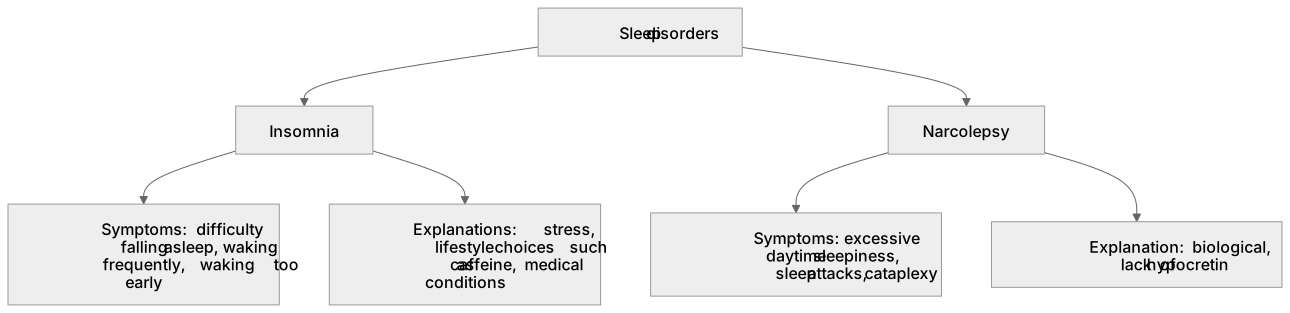
Sleep disorders significantly disrupt normal sleep patterns. Insomnia involves symptoms such as difficulty falling asleep, waking up frequently, or waking up too early. Explanations for insomnia include psychological factors like stress, lifestyle choices such as caffeine consumption, or underlying medical conditions. Narcolepsy is a neurological disorder with symptoms including excessive daytime sleepiness, sudden sleep attacks, and cataplexy (loss of muscle tone). The primary explanation for narcolepsy is biological, specifically a lack of the brain chemical hypocretin, which regulates wakefulness, often due to an autoimmune response. Understanding both the symptoms and the distinct explanations is crucial for diagnosing these conditions.
What earns the marks
- Identify symptoms of insomnia, such as difficulty initiating or maintaining sleep.
- Explain causes of insomnia, including stress, poor sleep hygiene, or medical issues.
- Identify symptoms of narcolepsy, such as excessive daytime sleepiness and cataplexy.
- Explain the biological cause of narcolepsy, focusing on the deficiency of hypocretin in the brain.
Common mistakes and how to put them right
Confusing the symptoms of insomnia and narcolepsy.
Put it right: Insomnia is the inability to sleep, whereas narcolepsy involves an uncontrollable urge to sleep.
Assuming insomnia is only caused by biological factors.
Put it right: Insomnia is frequently explained by psychological factors like anxiety or lifestyle habits.
Believing narcolepsy is just feeling tired.
Put it right: Narcolepsy includes specific neurological symptoms like sudden sleep attacks and cataplexy, not just general fatigue.
Exam tips
- Ensure you can clearly separate the symptoms (what the patient experiences) from the explanations (why it happens) for both disorders.
- Use the term hypocretin when explaining the biological mechanisms behind narcolepsy to demonstrate precise subject knowledge.
- Practice applying the symptoms of these disorders to case studies, identifying which disorder a hypothetical patient might be suffering from.
Try the lesson
The start of the Sleep and dreaming: 9.1.3 Understand symptoms and explanations of sleep disorders, including: a. insomnia b. narcolepsy lesson, made from checked teaching notes for this specification point.
Have a go first
Which of the following describes a primary symptom of narcolepsy?
Listen
Sleep disorders significantly disrupt normal sleep patterns. Insomnia involves symptoms such as difficulty falling asleep, waking up frequently, or waking up too early. Explanations for insomnia include psychological factors like stress, lifestyle choices such as caffeine consumption, or underlying medical conditions. Narcolepsy is a neurological disorder with symptoms including excessive daytime sleepiness, sudden sleep attacks, and cataplexy (loss of muscle tone). The primary explanation for narcolepsy is biological, specifically a lack of the brain chemical hypocretin, which regulates wakefulness, often due to an autoimmune response. Understanding both the symptoms and the distinct explanations is crucial for diagnosing these conditions. A strong answer earns marks for these points. Identify symptoms of insomnia, such as difficulty initiating or maintaining sleep. Explain causes of insomnia, including stress, poor sleep hygiene, or medical issues. Identify symptoms of narcolepsy, such as excessive daytime sleepiness and cataplexy. Explain the biological cause of narcolepsy, focusing on the deficiency of hypocretin in the brain. A common slip: Confusing the symptoms of insomnia and narcolepsy. Instead, Insomnia is the inability to sleep, whereas narcolepsy involves an uncontrollable urge to sleep. Exam tip: Ensure you can clearly separate the symptoms (what the patient experiences) from the explanations (why it happens) for both disorders.
See it
Key words
Say what each word means before you turn the card.
Insomnia
Try answering aloud or in your head before turning the card.
Narcolepsy
Try answering aloud or in your head before turning the card.
Biological explanations
Try answering aloud or in your head before turning the card.
See every definition
- Insomnia
- A sleep disorder involving symptoms such as difficulty falling asleep, waking up frequently, or waking up too early.
- Narcolepsy
- A neurological disorder with symptoms including excessive daytime sleepiness, sudden sleep attacks, and cataplexy (loss of muscle tone).
- Biological explanations
- For narcolepsy, the primary explanation is a lack of the brain chemical hypocretin, which regulates wakefulness, often due to an autoimmune response.
Label the diagram
Some boxes have lost their names. Pick the right name for each number.
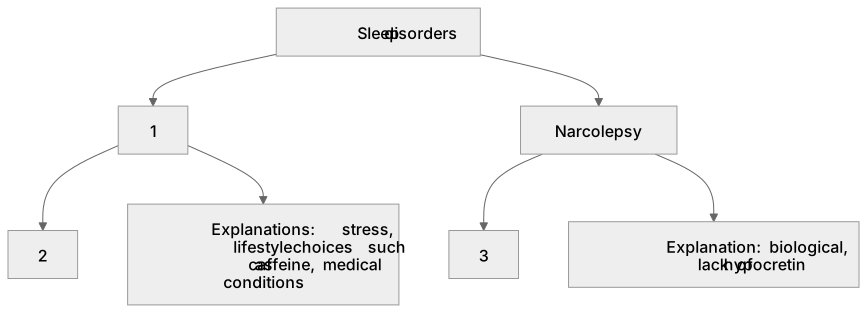
1Box 1
2Box 2
3Box 3
There is more to this lesson
The full lesson goes on to check your understanding and help you earn the marks. Create a free account to carry on, with your progress saved.
A week of Premium from your first lesson · Then the free plan continues · No card, no charge
Test your understanding of Sleep and dreaming: 9.1.3 Understand symptoms and explanations of sleep disorders, including: a. insomnia b. narcolepsy
Active recall beats re-reading. Take an instant quiz now to test what you’ve learned and lock it into long-term memory.
A week of Premium from your first lesson · Then the free plan continues · No card, no charge